Cairo 2026 — invitation as external examiner + Talk on demedarts

Design, Empathy, and Multisensory Art: Reflections from My Visit to Cairo
My recent visit to Cairo was shaped by two meaningful engagements at the German University in Cairo. I had the honor of participating as an external examiner for the university’s masterclass examinations, an experience that offered valuable insight into the students’ creative research, design processes, and final projects within a different cultural setting. Witnessing the depth of inquiry and experimentation in their work was both inspiring and energizing to see and feel.
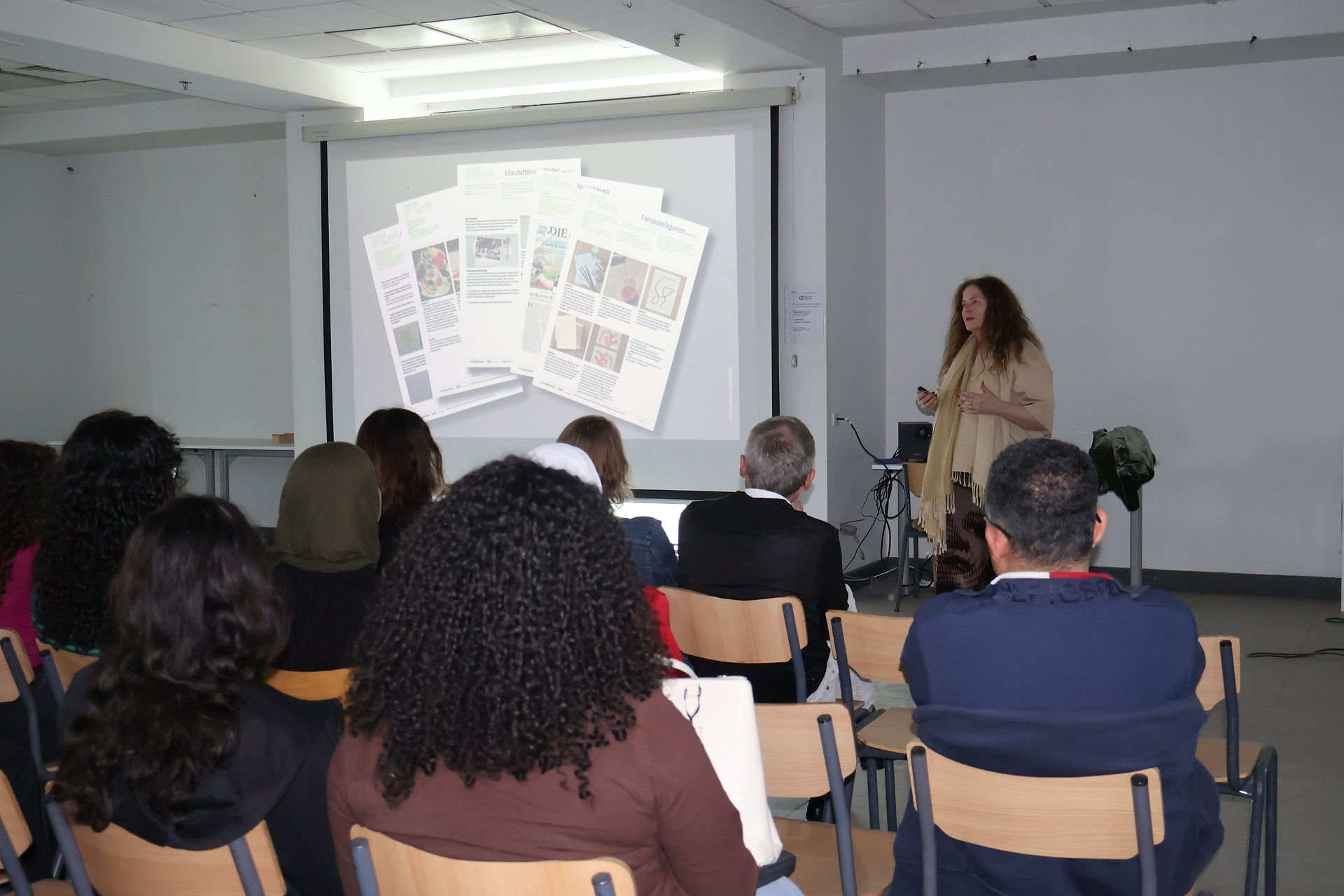
Alongside this role, I was invited to contribute to the DESIGN TALKS series with a workshop presenting the work of "DEMEDARTS" project (fwf funded, AR-609 PEEK, Grant-Doi:10.55776/AR609 ) exploring the intersection of design, art, and cognitive health.
Sharing Research on Dementia, Art, and Critical Design
The workshop focused on the work of the DEMEDARTS project, which investigates how multisensory artistic practices and critical design approaches can help us rethink our understanding of dementia.
Presenting this research in Cairo felt like opening a space for dialogue, empathy, and new ways of seeing. Dementia is often framed primarily within medical or clinical discourse, but artistic and design-based approaches can offer alternative perspectives that center experience, perception, and human connection.
Through multisensory artworks and design strategies, the project explores how sound, touch, visual perception, and spatial interaction can help communicate aspects of memory, identity, and cognitive change that are often difficult to express through language alone.
Exploring Dementia Through Art and Design
During the workshop, participants reflected on how creative practices can challenge conventional narratives about aging and cognitive decline. By approaching dementia through artistic experimentation and participatory design, we can create opportunities for reflection and social awareness.
These methods not only support new forms of storytelling but most importantly open conversations about care, dignity, and inclusion.
Creating a Space for Dialogue
One of the most rewarding aspects of the session was the lively and thoughtful exchange with students and participants. The questions raised during the workshop touched on themes such as:
ethical considerations when working with vulnerable communities
the role of sensory experiences in shaping memory and perception
how design can intersect with healthcare, sustainability, and social engagement
The energy in the room highlighted how design can act as a bridge between not only disciplines but cultures, encouraging collaboration between art, science, and society in general.
Cross-Cultural Perspectives on Design and Care
Hosting this conversation in Cairo added another important layer to the experience. The diverse perspectives of the participants enriched the dialogue and demonstrated how themes such as memory, care, and human experience resonate across cultures.
Design has the ability to translate complex experiences into shared forms of understanding. Moments like these reaffirm how international exchange can broaden the ways we think about art, research, and social responsibility.
A Collaborative Research Context
The workshop was part of the broader FWF PEEK AR-609 research framework and connects to ongoing work with colleagues including Pia Moana Scharler, Zentrum Kunstdidaktik and University of Applied Arts Vienna.
Special thanks also go to photographer Rana Wassef for capturing moments from the workshop which I put into a short movie, and to everyone who contributed their curiosity, ideas, and thoughtful questions.
Looking Ahead
Experiences like this remind us how design and art can create spaces for empathy, reflection, and dialogue.
By working across disciplines and cultural contexts, we can explore new ways of addressing complex topics—from cognitive health and aging to sustainability and education.
I am grateful for the warm welcome and inspiring conversations in Cairo.
Until next time.




Comments