STEEL PLANTS: on display at WASTE ART
Updated: Aug 8

Proud to present my newest work
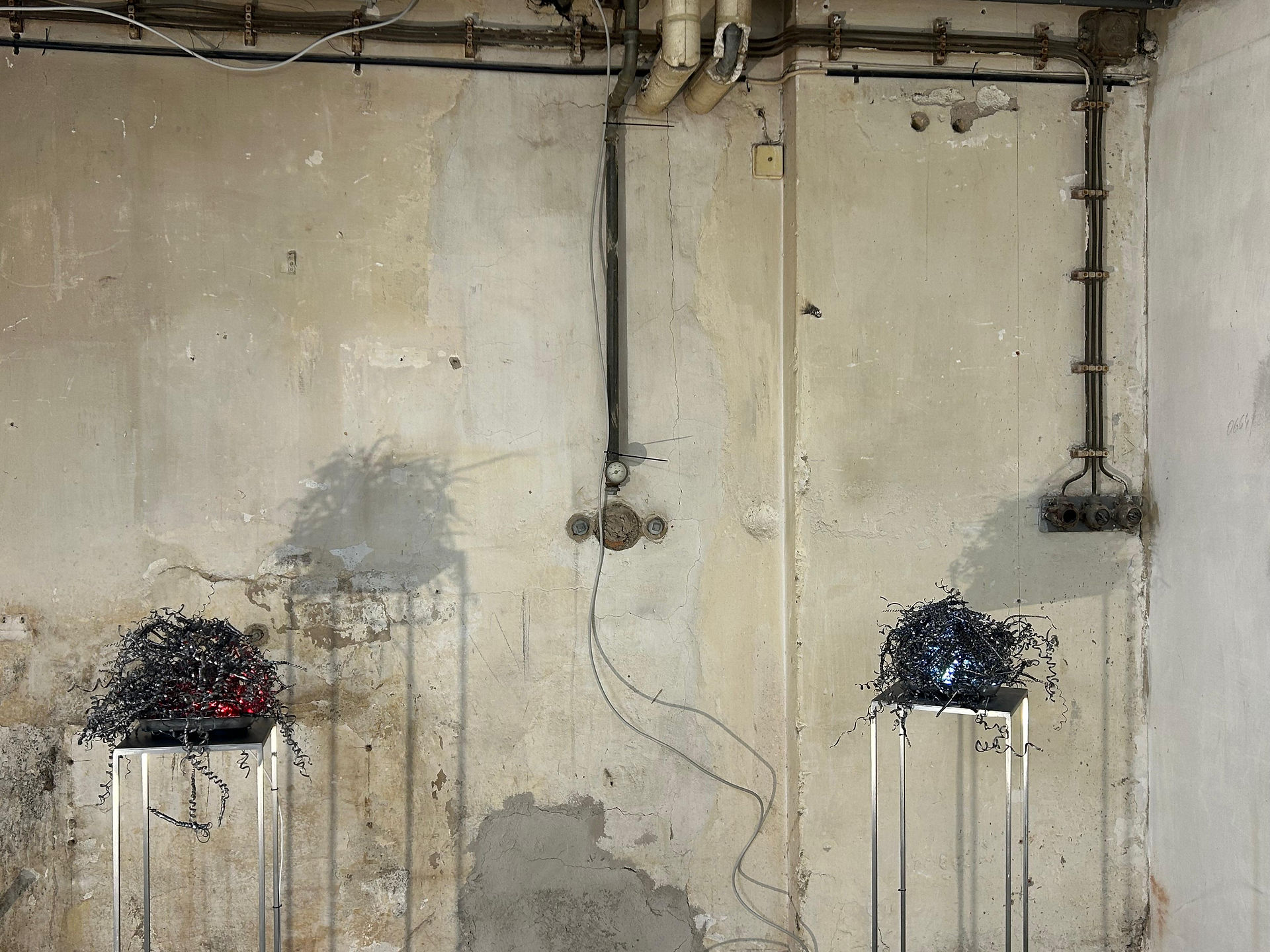
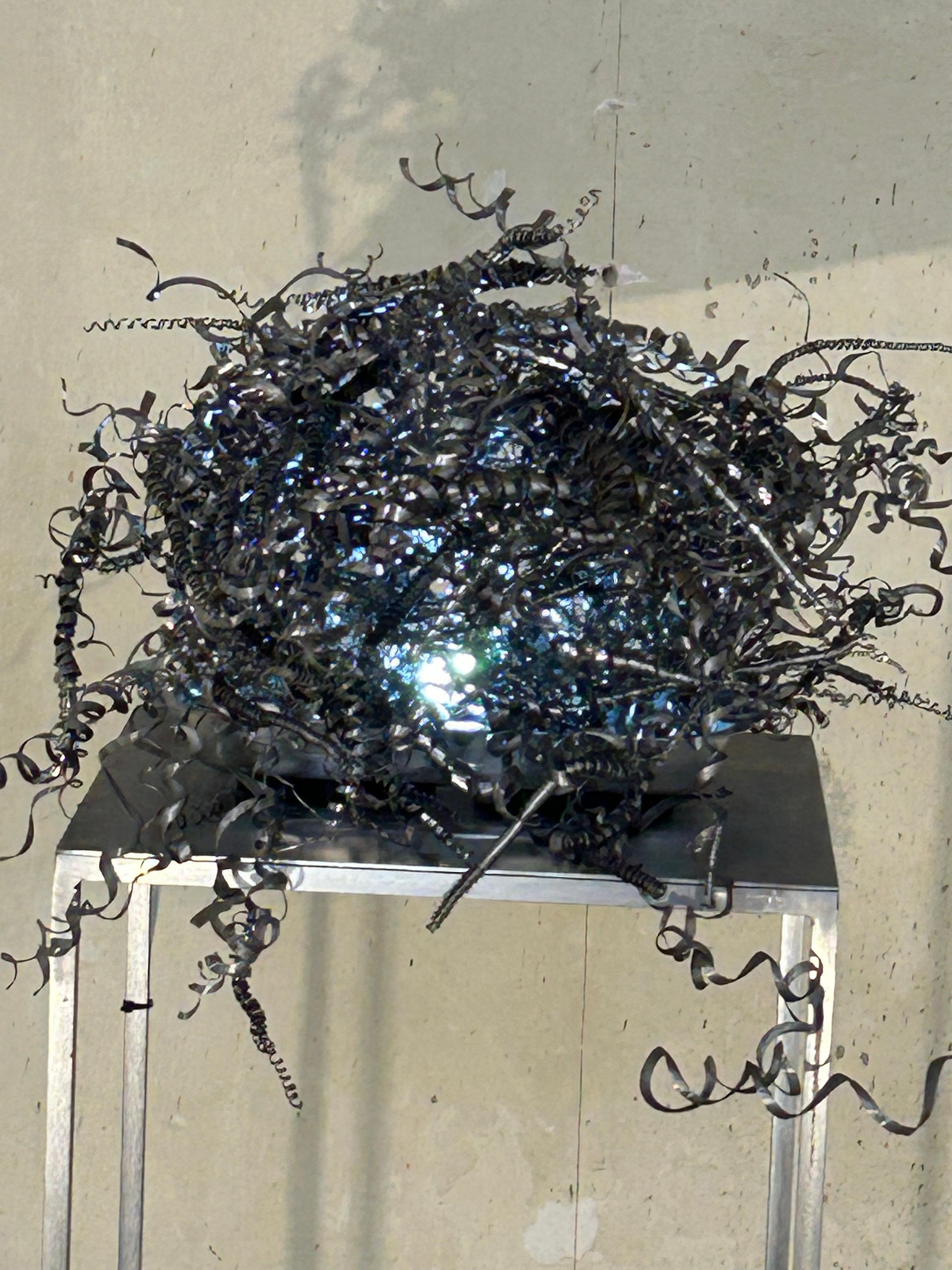
STEELPLANTS (WASTE / NOT — Steel Shavings)
When Waste Begins to Grow
What happens when industrial residue begins to resemble living matter? When what we discard starts to speak the language of growth?
In STEELPLANTS (WASTE / NOT — Steel Shavings), steel shavings—by-products of drilling and milling—are removed from their functional context and re-presented as a still life. Elevated onto a pedestal, these traces of precise technical processes shift their meaning. Their fine, curling structures evoke vegetal forms: fragile, branching, almost alive.

Between Industry and Ecology
This visual ambiguity is central to the work. The steel fragments enter into dialogue with rare and endangered plants, connecting two seemingly opposed realms: industrial production and vulnerable ecosystems.
Steel, one of the most ubiquitous materials of our time, is often celebrated for its recyclability—up to 99 percent. Yet even within circular systems, the material carries the imprint of extraction, transformation, and environmental intervention. The shavings are not merely waste or resource; they become indicators of ecological pressure and technological expansion.
Value, Vulnerability, Transformation
By translating industrial residue into the visual language of the still life while echoing the morphology of endangered plants, the work invites a shift in perception. It questions how value is assigned and challenges the separation between natural and artificial, growth and production, fragility and permanence.
STEELPLANTS suggests that the remnants of technical processes hold more than material presence—they carry ecological and symbolic meaning. To see only the shavings and not the plant, only the material and not the cycle, is to overlook the connection—and with it, the urgency embedded within it.





Exhibition Context
The work is part of the exhibition project waste-art.net, currently presented at the Sudhaus Bad Ischl and unfolding across multiple locations.
A huge thank you to the organizers — especially @am_fluss and @ina_loitzl — who worked tirelessly for nearly a year to bring this project into being.
Sponsors & Support
Special thanks to the main sponsors and supporters:
Salinen Austria
Stadt Bad Ischl
Tourismus Salzkammergut
Kultur Oberösterreich
Steirische Kulturinitiative (for supporting the workshops)
As well as all partners and contributors who made this project possible.
Fellow Artists
I’m grateful to be showing alongside: Alfredo Barsuglia, bisesmirvomleibe, Annegret Bleisteiner, Werner Boote, Isolde Bornemann & Dieter Bornemann, Sonja Dieplinger Trinkl, Christian Eisenberger, Fahnenmeer, Stella Bach & die 4 Grazien, Lois Hechenblaikner, Christopher Alan Lane, Gudrun Lenkwane, Ina Loitzl, The Art Researcher, Torsten Mühlbach, Stefanie & Erwin Posarnig, Nicole Pruckermayr, Archiv001, Rosa Roedelius, Angelo Roventa, Kaktus Cartoon Award, Daniel Spoerri, Dario Tironi, and Stephan Unterberger.
Additional Information
"WASTE ART SALZKAMMERGUT"
A multimedia exhibition engaging with the waste of our society, in Bad Ischl
Exhibition duration: 17.04. until 16.05.2026
Opening: Friday 17.04.2025 5pm
Soft opening: until Sunday 19.04.2026 - happenings and times see below
Finissage/ Party: Saturday 16.05.2026
Locations: Sudhaus Ischl Salinen Austria, Salinenplatz 1 4820 Bad , and Gallery AM FLUSS, Hasnerallee 2, 4820 Bad Ischl, AUSTRIA
Opening Hours During the Exhibition
Thursday: 4:00 PM – 7:00 PM
Friday: 11:00 AM – 4:00 PM
Saturday: 10:00 AM – 3:00 PM

Comments